MAKING OF THE TEXTILE PIECE
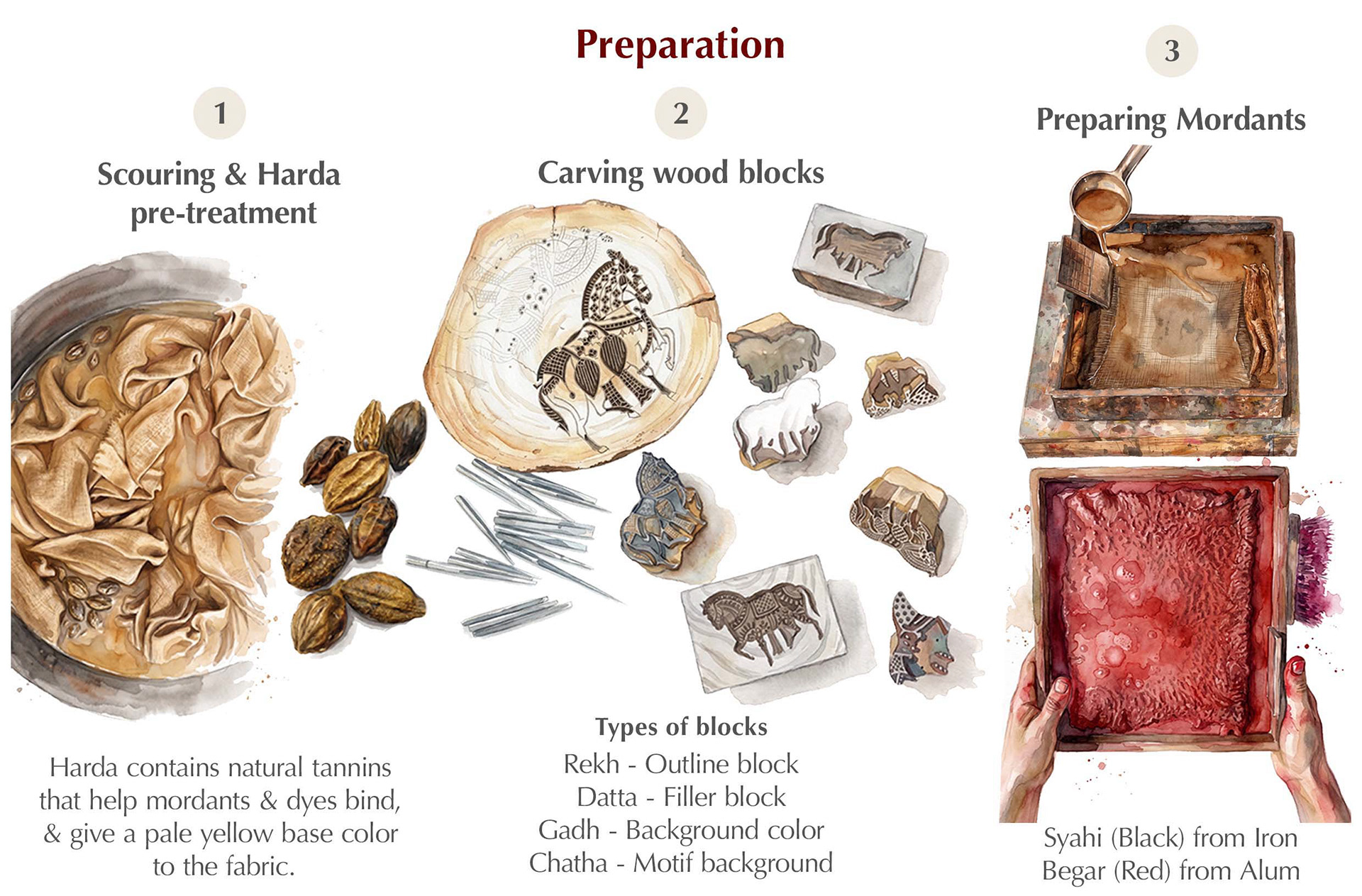
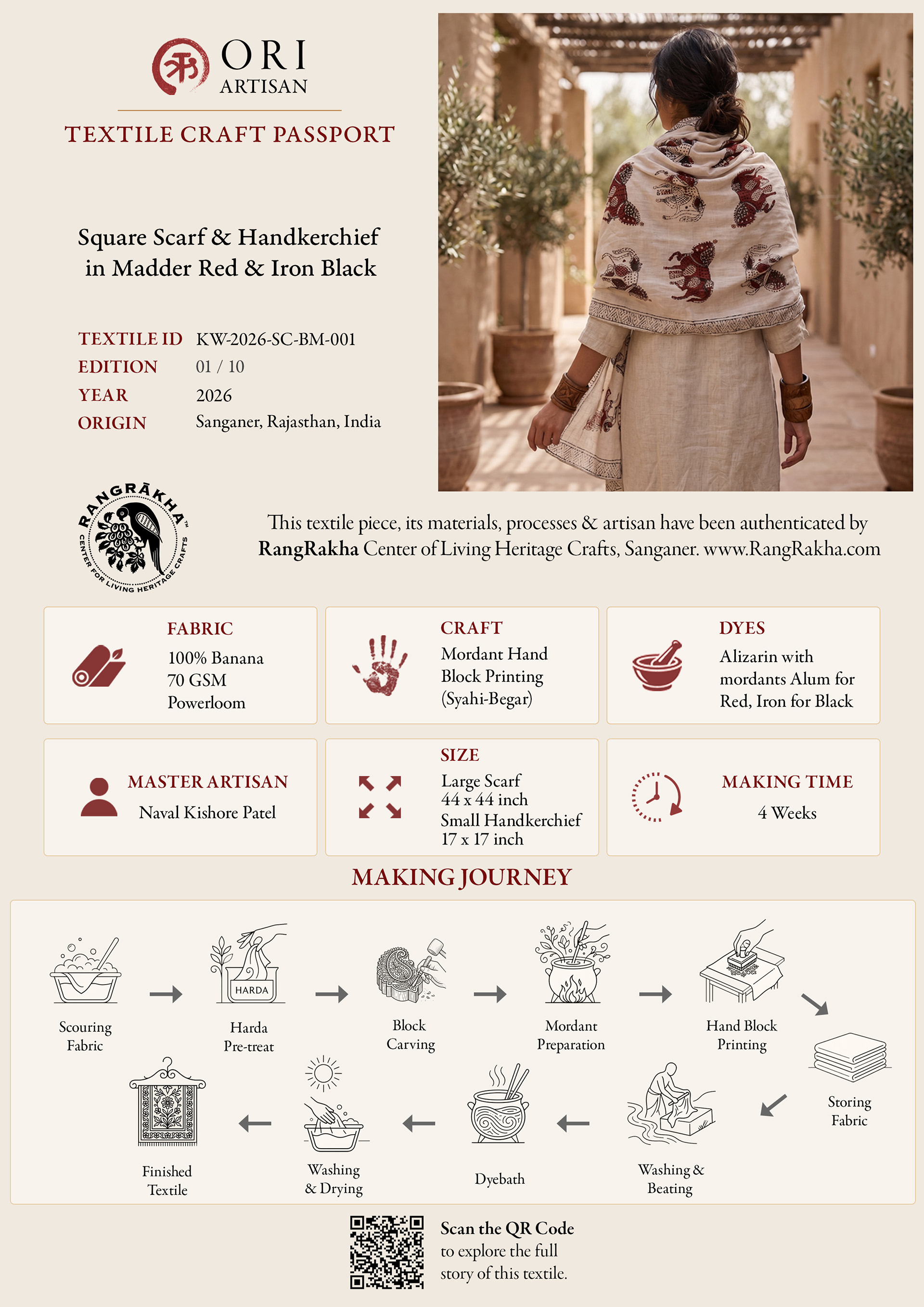
Scouring - Before printing the fabric is thoroughly washed in a process known as scouring. The cloth is soaked, boiled with natural cleansing agents such as soapnut and soda ash, washed and beaten by hand to remove starch, oils, and impurities. This process opens up the fibres and prepares the fabric to properly absorb tannins, mordants, and natural dyes.
Harda (Myrobalan) is used to treat the fabric before printing because it contains natural tannins that help mordants and dyes bind to the cloth. It also gives the fabric a pale yellow base that is characteristic of traditional block printed textiles.
Block Carving All blocks are carved by hand on Sheesham, Sagwan (Teak) wood or Rohida wood and finished with a handle for printing. It could take days to carve the block depending on the complexity of design. Traditional block printed designs are created using different blocks, each with a specific role in building the final pattern. The main types of blocks are Rekh, Datta, Gadh, and Chatha.
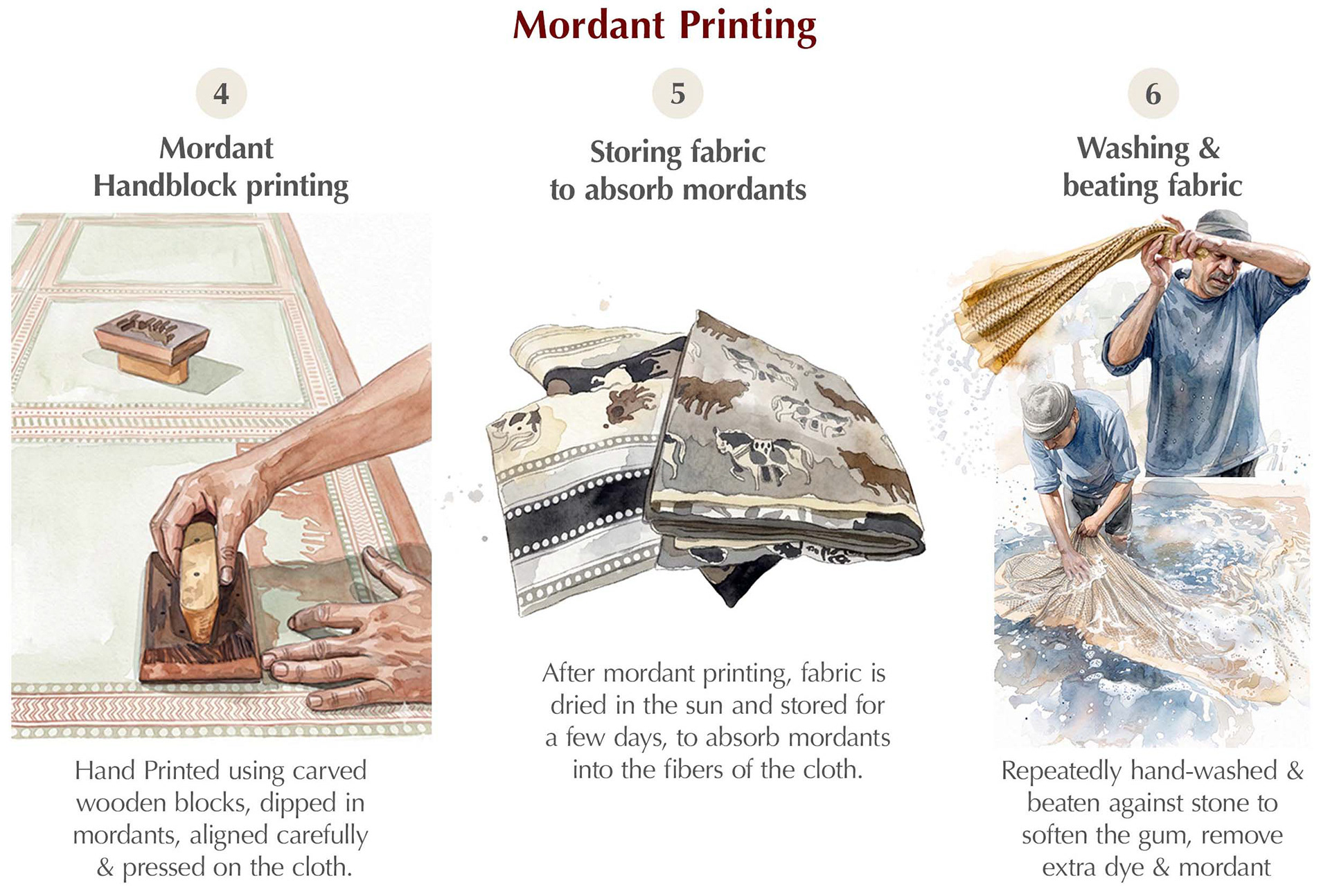
Mordant printing is a traditional technique where printing is done using mordant pastes instead of colour. The colour appears only after dyeing, revealing the printed pattern. In syahi-begar, syahi iron paste creates black through reaction with tannins, while begar (alum) develops red later in the dye bath.
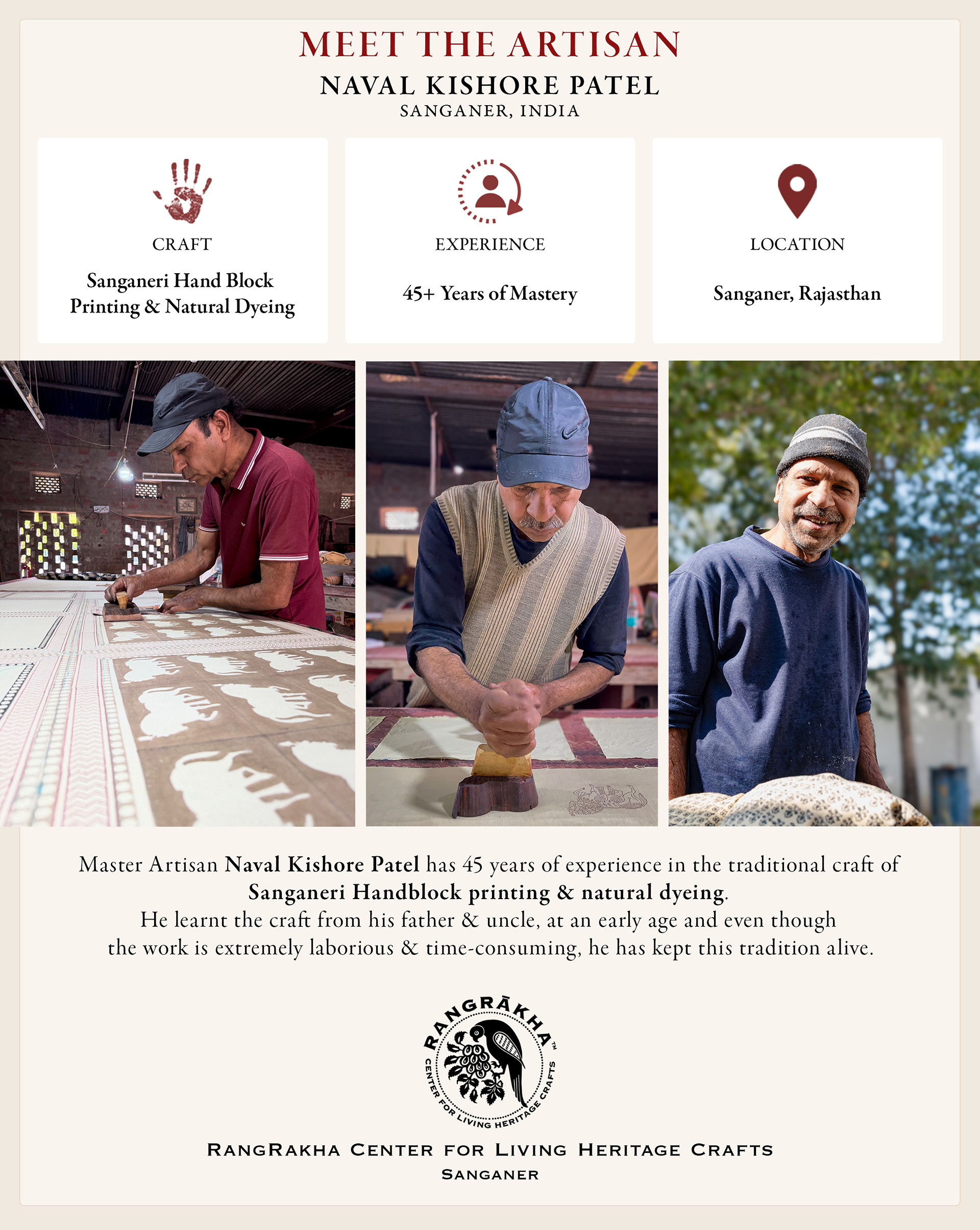
Every motif is printed by hand using carved wooden blocks, a skill passed down through generations. The block is dipped into colour, aligned carefully and pressed onto the cloth. Each impression builds the pattern piece by piece.
The fabric is soaked in a water tank and repeatedly hand-washed and beaten against stone to soften the gum, remove extra dye & mordant, and open the fibers of the fabric, which helps develop color evenly. It's physically demanding and is feasible only for small-batch production.
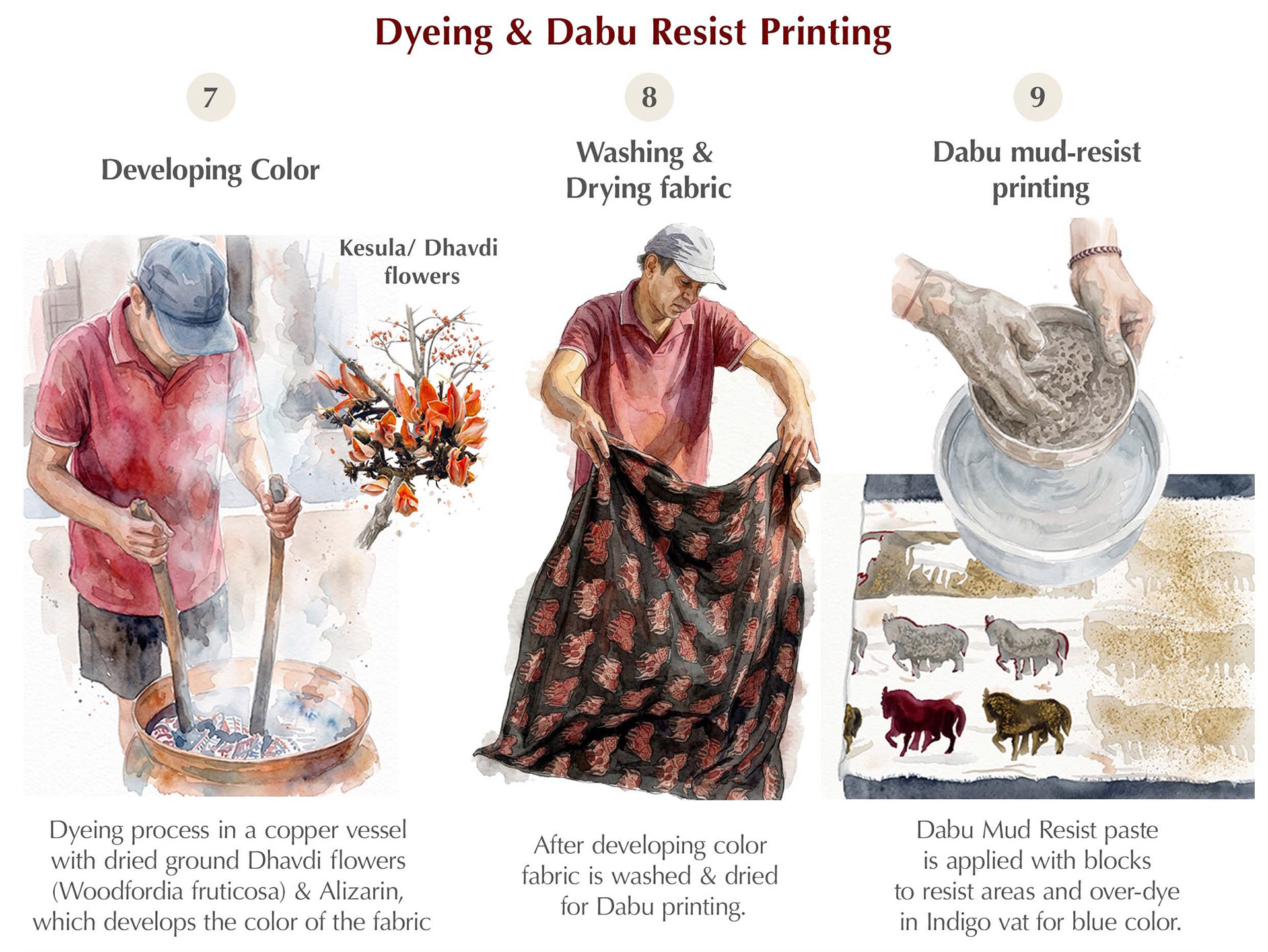
The dyeing process is carried out in a copper vessel by boiling water with dried ground Dhavdi flowers (Woodfordia fruticosa) and Alizarin, which develops the color of the fabric in the pot.
The colours appear only after dyeing, revealing the printed pattern. Copper vessels are used in traditional dyeing as copper helps deepen natural dye colours and provides even heating, which allows colours to develop slowly and evenly on mordant printed fabric.
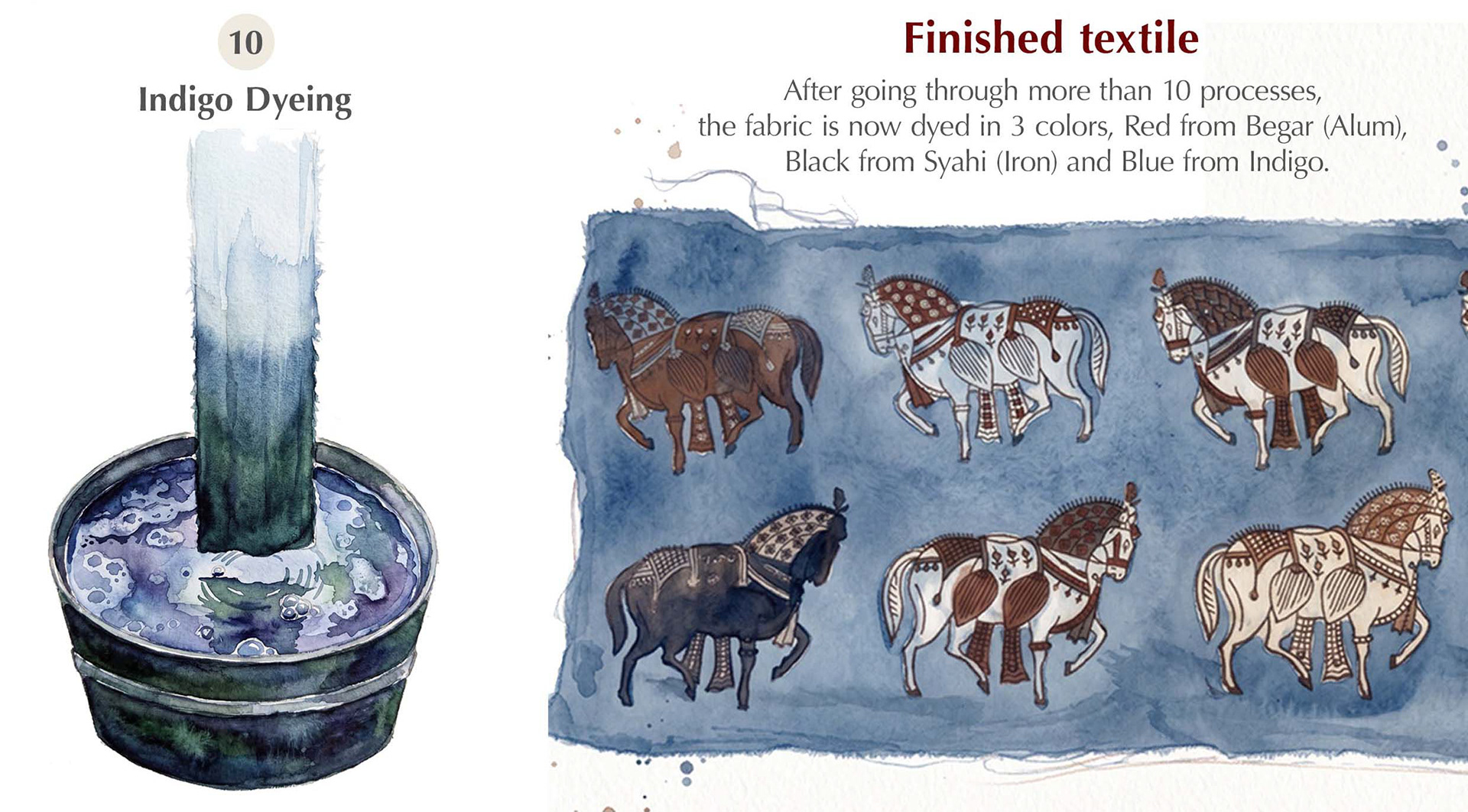
The mordant printed fabric is washed, dried and Dabu block printed to resist certain areas and over-dyed with 3rd color - Blue in an Indigo vat.
TRACEABILITY
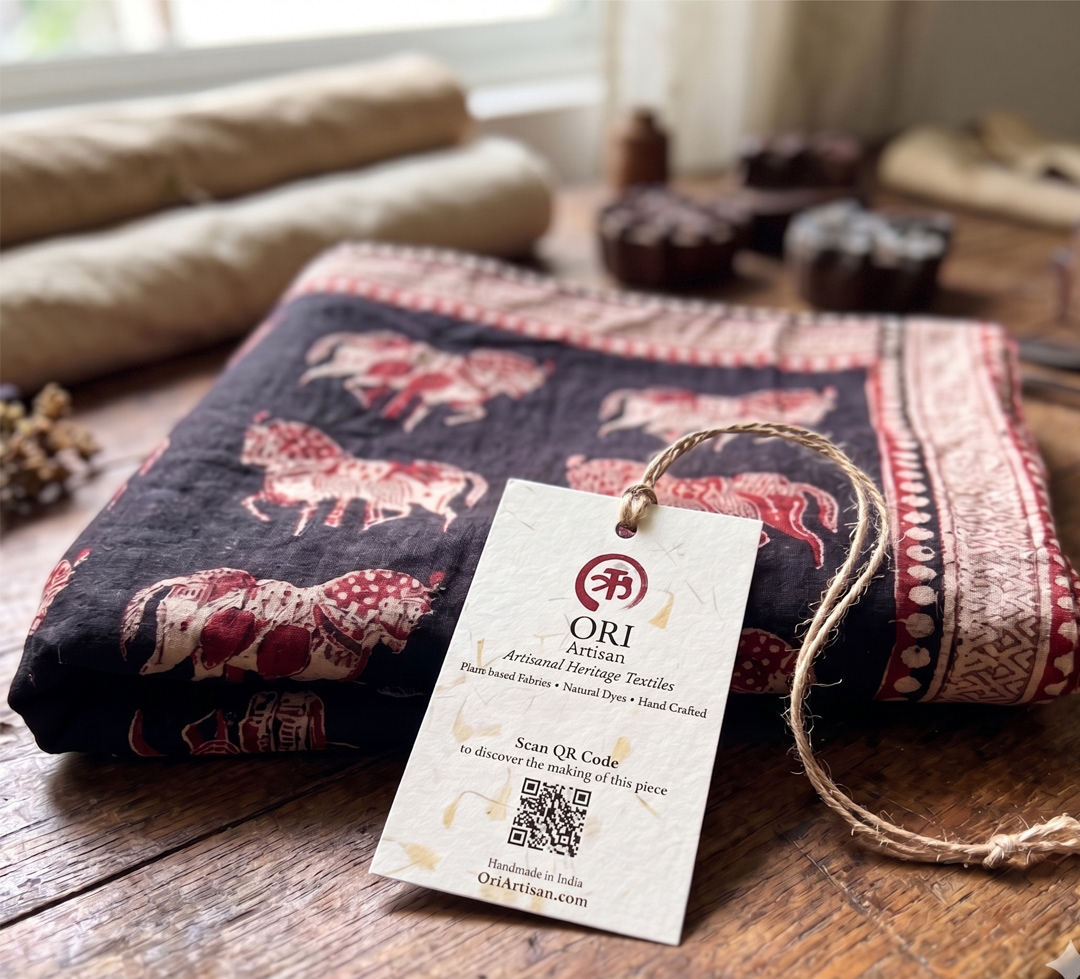
Every ORI Collectible piece is traceable and comes with a unique QR Code. Find the code on the tag and scan it to discover the Artisan, the process and stories behind the making of that piece.
If you would like to own an Ori Artisan piece, request a catalogue, collaborate, please write to contact@oriartisan.com Follow @Ori.Artisan